
CMAS Contribution
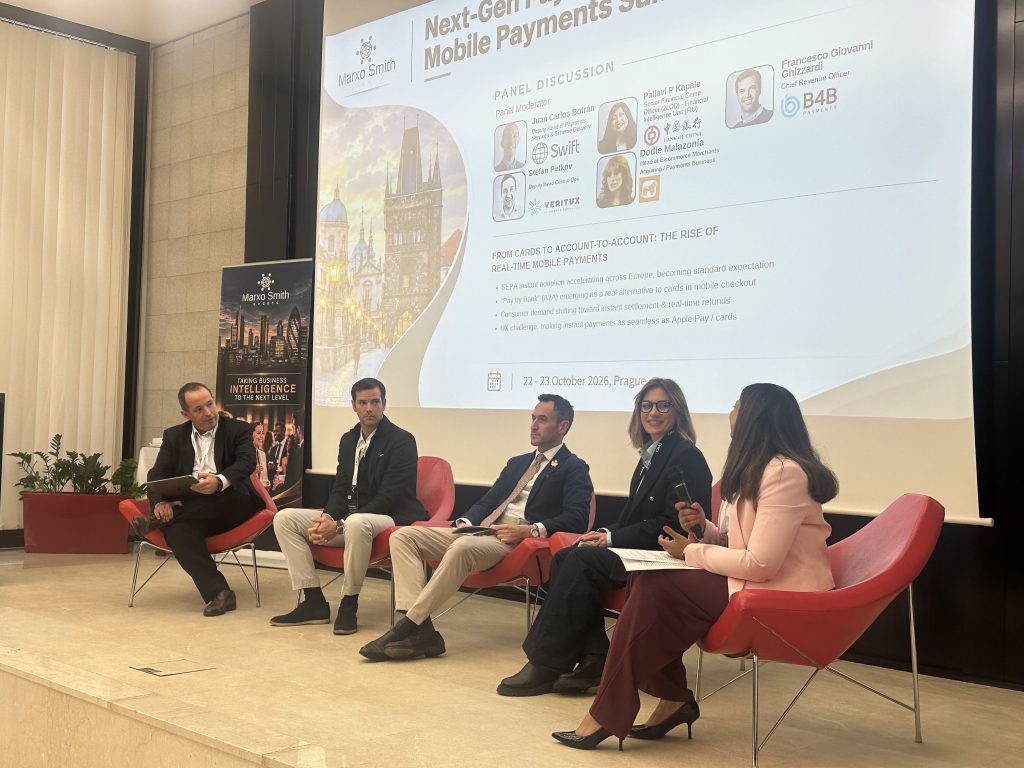
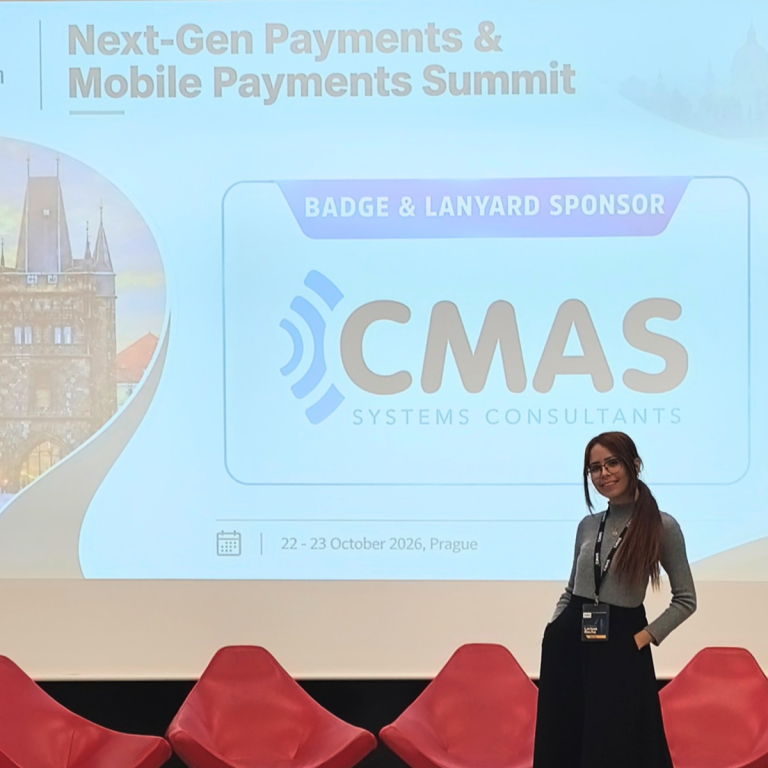
As the Badge & Lanyard Sponsor of the Next-Gen Payments & Mobile Payments Summit 2026, CMAS SYSTEMS is proud to support one of the leading gatherings of payments, fintech, and banking professionals in Europe.
Through its sponsorship, CMAS Systems reinforces its commitment to driving innovation in the payments ecosystem while increasing its visibility among senior leaders and stakeholders, helping to shape the next generation of financial services & technologies.
Main highlights
Money mules
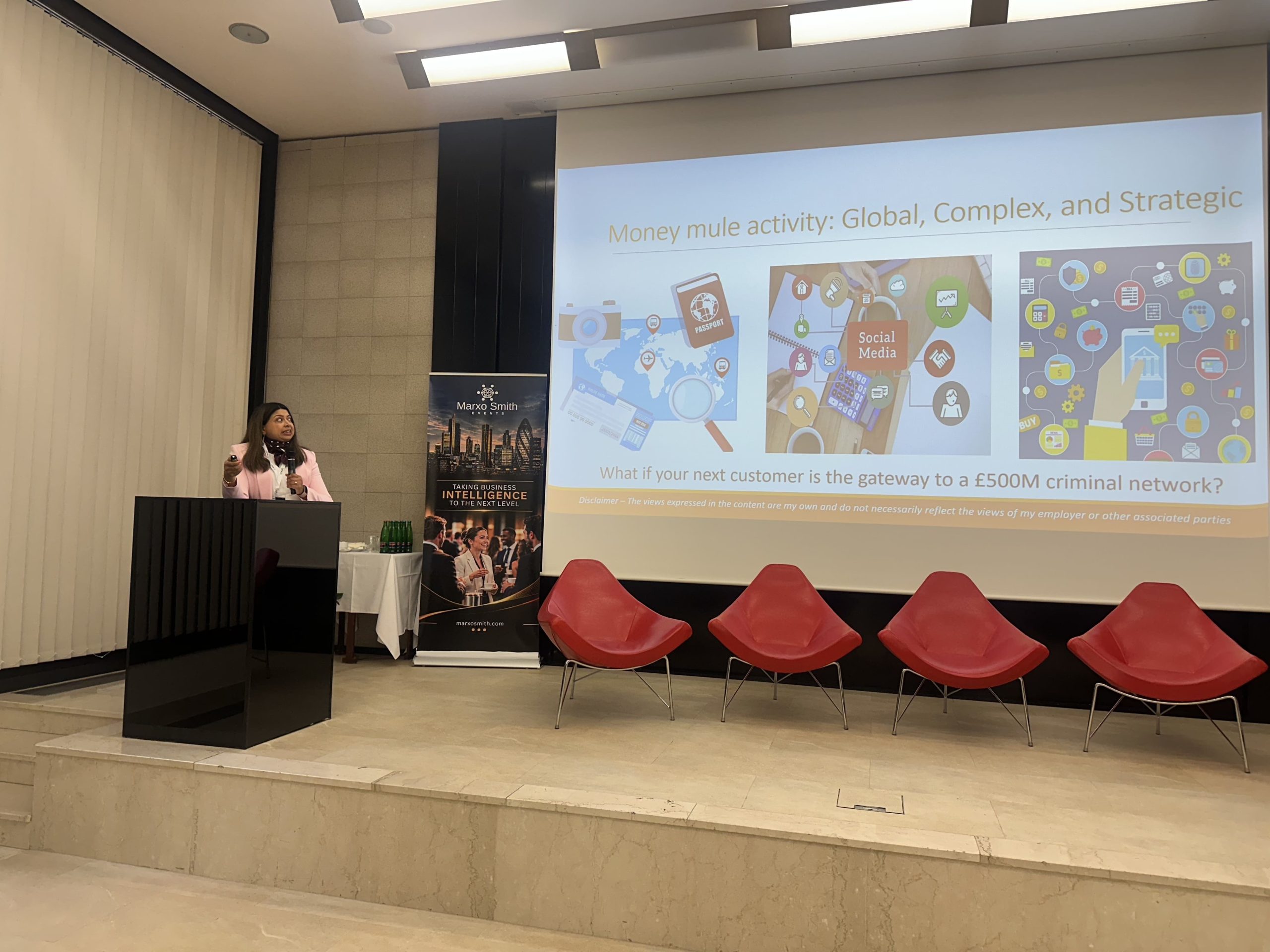
Every fraud, scam, and cyber-attack ends with the same problem for criminals: moving the money; that is where money mules come. A money mule is someone who moves money for criminals, often using their own bank account. It can be many reasons, according to different regions and intentions. For example, in the USA, it can involve romance scams; in Africa, account takeovers. It can also involve crypto cross-chain mule networks worldwide.
The FCA data shows 238,396 suspected mule accounts offboarded in 2025 and 656,600 customers offboarded across 2023-2025. For banks and payment providers, this exposes a real control gap. The new EU Verification of Payee requirements, phased in for Euro-area PSPs from October 2025, confirm that a name matches an IBAN. However, a verified payee is not always legitimate because the victim can still be manipulated.
Revealing that institutions need to combine fraud signals, AML intelligence, and beneficiary network analysis. They should design controls around monetization pathways, not any single payment rail.
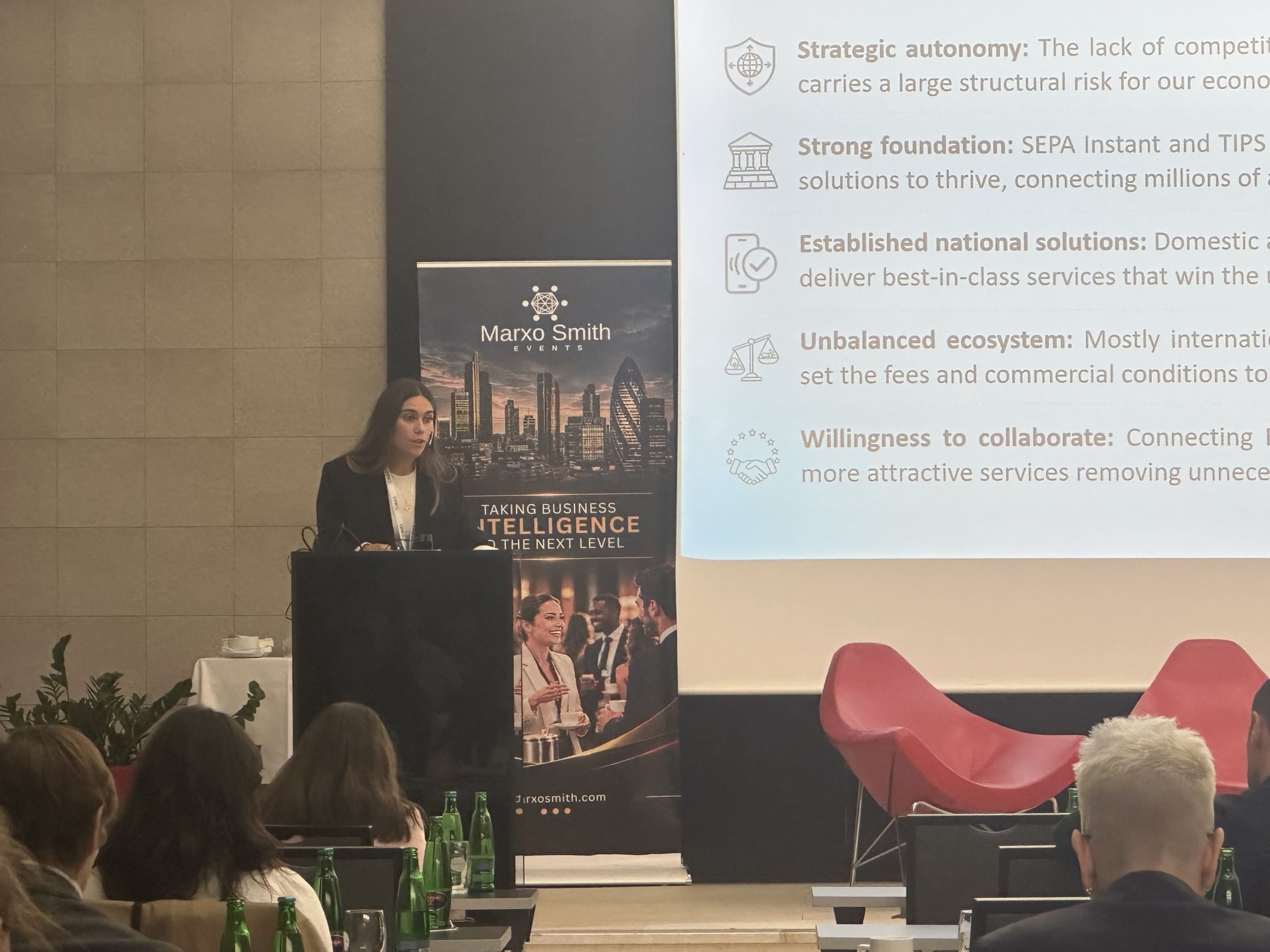
Europe’s Push for Payment Sovereignty Through Interoperability
International card networks dominate Europe’s payments market, while major tech platforms in some countries set payment fees and terms. This imbalance and weak cross-border retail competition pose structural risks to Europe’s economy and strategic autonomy..
SEPA Instant and TIPS already connect millions of accounts across Europe, providing a solid foundation for account-to-account payments. National payment schemes show European players can innovate and win users and merchants. Linking these domestic successes and reducing fragmentation would boost appeal and competitiveness..
That ambition took a concrete step forward in September 2026, when Bancomat, Bizum, EPI, SIBS and Vipps agreed to create the European Network for Payments (ENP). It aims to connect European payment solutions through a single central hub, increasing customer choice and merchant acceptance across Europe. The roadmap prioritises P2P, e-commerce, and in-store payments in the coming years; the network is also open to additional European payment solutions and markets that wish to join.
From Eurosystem Strategy to National Action
The nature of payments is changing, with digitalisation and new technologies at the heart of the transformation. In response, the ECB published the Eurosystem’s comprehensive payments strategy (CPS) on 31 March 2026. It brings together wholesale, business-to-business, retail and cross-border payments in one clear, future-focused plan. The plan is built on four strategic aims. First, central bank money remains a trusted anchor in retail and wholesale markets. Second, it supports an integrated, competitive, and innovative payments ecosystem. Third, it strengthens strategic autonomy and improves resilience in European payments. Fourth, it supports the euro’s international role.
Portugal shows how a national approach can support European goals. The Portuguese Payment Systems Forum, an advisory group to Banco de Portugal, brings together 45 payment-sector entities, including payment service providers, consumers, companies, and government bodies. Its mission is to promote safe, efficient, innovative payments by fostering cooperation and setting priorities for the national strategy. In 2025, SICOI processed 5.2 billion retail transactions worth €875.9 billion—up 10.7% in volume and 12.8% in value vs. 2024—averaging 14.2 million payments (€2.4 billion) per day.
Building on two earlier strategies (2020-2022 and 2023-2025), Portugal is close to publishing its third National Strategy for Retail Payments, set for adoption in 2026-2030 following a recently closed public consultation. It is organized around four strands: outreach and communication, innovation and digital transformation, security and efficiency, and resilience and sustainability.
The payments landscape will stay dynamic and fast-paced, with a more complex ecosystem. So, the vision and strategic goals set by central banks, especially the Eurosystem, must drive secure and steady progress.
It must be done without slowing innovation. With the CPS, progress on the digital euro and national strategies being implemented across several countries, Europe can move towards a stronger, more autonomous, integrated, competitive, and innovative payments ecosystem.
What is the digital Euro and why EU need it?
The case rests on three ideas: resilience, efficiency and autonomy. The digitalisation is changing how we pay, and central bank money needs to keep pace with that shift. Twenty-five years after the introduction of the euro, the euro area still lacks a European digital payment solution that works across all its countries, with national schemes largely confined to their home markets.
As a result, reliance on non-European providers continues to grow. The digital euro is designed as a digital complement to cash. Basic services would be free. It would be backed by central bank money. It would be accepted across the euro area. It would protect privacy and work even offline. With one app, people could pay in shops or online. They could also pay each other directly. They could use NFC, QR codes, or an alias. To protect banks, safeguards like household holding limits and a ban on enterprises can prevent large deposit shifts from banks.
The financial industry has a central role in the model. The Eurosystem will issue the digital euro and settle payments. Supervised payment service providers will distribute it to customers. The private sector can build new services on the shared infrastructure. Banks and other providers will keep their customer relationships.
Where Does Europe Stand now?
The digital euro is not meant to compete with private solutions; it aims to create synergies and cut payment fragmentation across the EU. Uniform standards are being developed with industry, merchants, and consumers.
On the technical side, the sourcing phase is complete. Six national central banks will jointly develop and run the infrastructure. Based in Austria, Germany, Spain, France, Italy, and Lithuania. Access is proposed for euro area residents and businesses, covering visitors and EU citizens using free movement rights. Wider access may be possible through agreements with non-euro countries.
The timeline is becoming clearer: after an investigation phase (2021–2023) and a preparation phase (2023–2025), the project entered its next stage in November 2025. The Commission proposed the legislation in June 2023. The Council adopted its negotiating position in December 2025, and Parliament followed in July 2026, setting up final talks between EU lawmakers. The regulation is expected by the end of 2026.
A 12-month pilot involving Eurosystem staff, selected banks, and merchants is planned to start in the second half of 2027. If lawmakers stay on schedule, the Eurosystem expects to be ready for a possible launch in 2029. For banks, payment providers, and merchants, the message is simple: now is the time to get involved, help shape the standards, and gain real-world experience.
The Future of Payments Profitability: Capturing Value, Not Just Volume
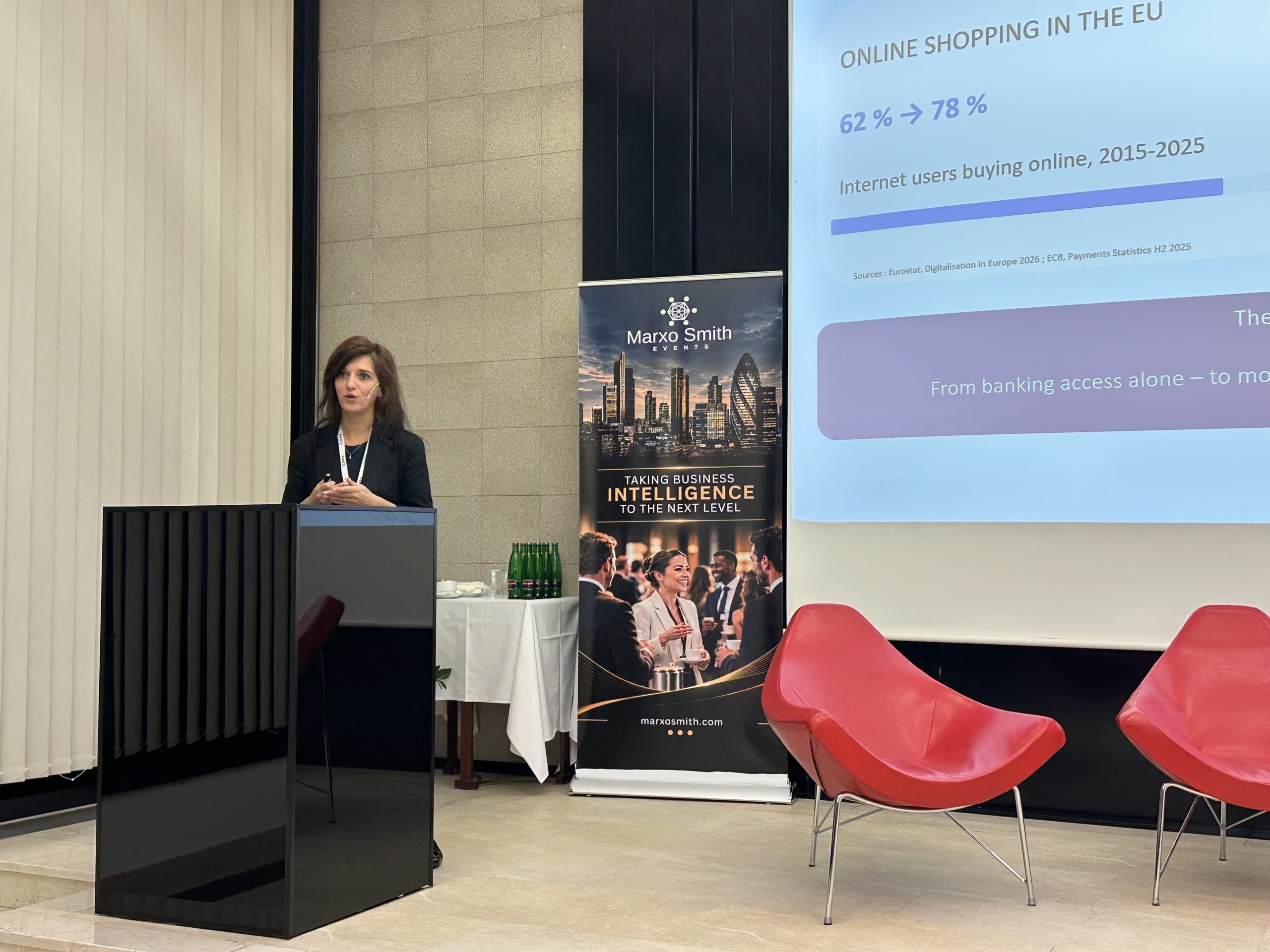
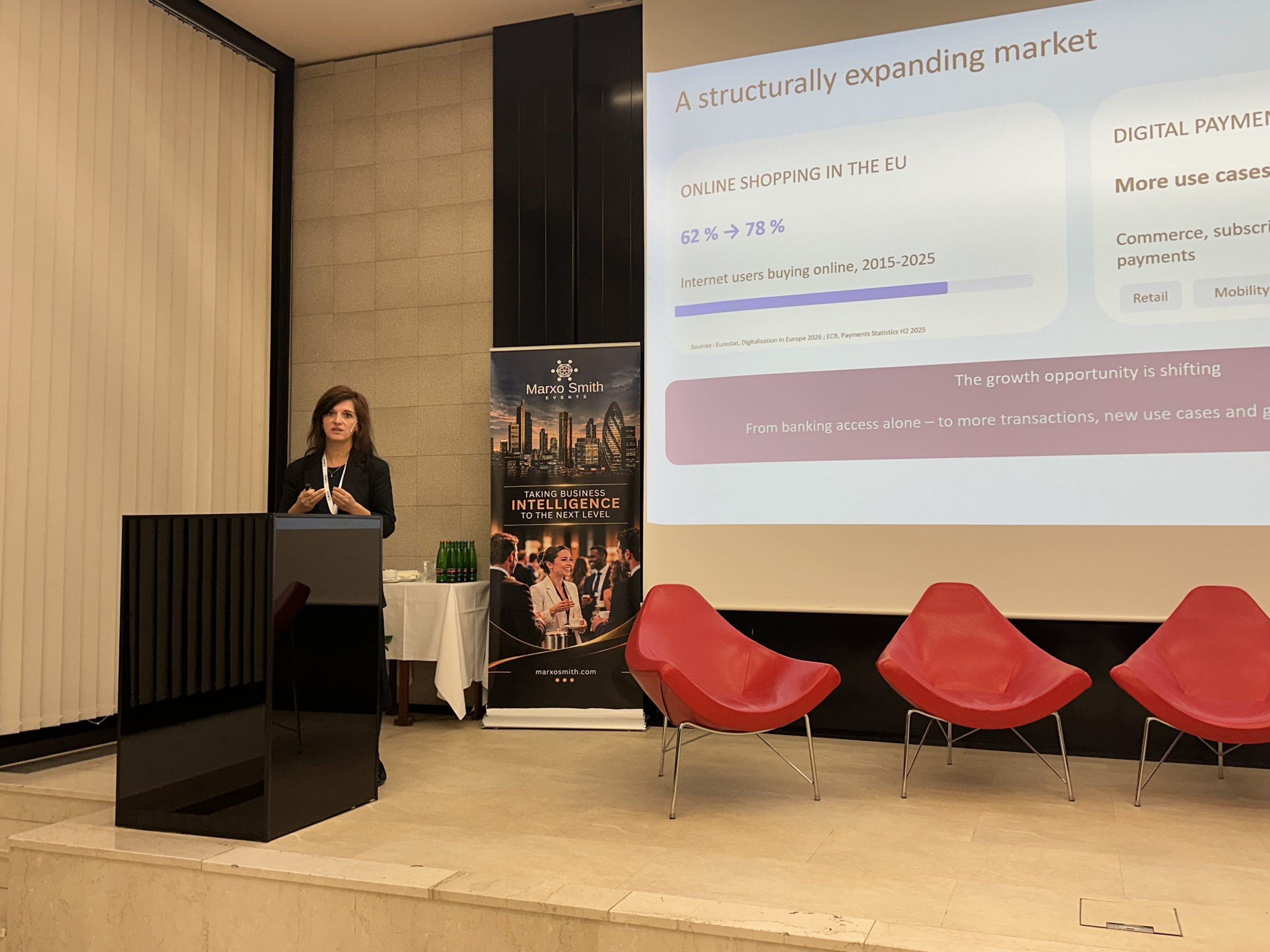
Payment economics are shifting. Profit will no longer come from processing more transactions alone. It will come from capturing more value: scaling efficiently so growth improves unit economics, connecting the ecosystem through rails, partnerships, and customer experiences, and creating differentiated value by monetizing the customer relationship, not just the transaction.
The market is moving toward a multi-rail world where cards, instant account-to-account transfers, and wallets operate in a single connected environment. Interoperability schemes and value-added services tie these rails together. Cards still matter, but the model is under pressure as value is split across issuers, networks, acquirers, and the checkout experience.
Banks can still win by improving authorization rates, delivering merchant value-added services, reducing fraud and service costs, and building stronger relationships that drive retention.
Regulation is also reshaping the landscape. It raises the bar on fraud prevention, consumer protection, and operational resilience. At the same time, it enables new entrants, new distribution models, open banking services, and partner-led innovation. The right response is to treat regulatory change as a business-model choice, not just a compliance exercise.
where should banks compete and invest?
They should focus their competitive strategy and investment on three actions: streamline operations by standardizing infrastructure and automating core processes; partner to extend reach through payment schemes and interoperable networks; and differentiate by delivering services that deepen customer relationships and capture more value.
In practical terms, that means choosing among three investment paths:
(1) strengthen the core card and payments engine to lower unit costs and automate exception handling;
(2)grow account-to-account and instant payments by working with partners and building interoperable use cases;
(3)build value-added services that link payments with Request to Pay, invoicing, reconciliation, and cash management.
Evaluate each option using clear criteria. Consider the expected return and payback time. Look at customer adoption and willingness to pay. Assess execution risk. Check resilience and regulatory requirements. Also evaluate how well it can stand out and scale.
The key point for payments leaders: this is one integrated strategy, not three separate bets. The winners will combine a highly efficient core with services that create clear customer value around it.
Stay Ahead of The Latest Trends
Subscribe to our newsletter for regular updates on payment innovations, regulatory changes
and strategic insights for finance & tech leaders.
CMAS – Systems Consultants
Edificio Escritorios do Tejo
Rua do Pólo sul , 2 D
Parque das Nações
1990-273 Lisboa
+351 21 1349080
